Digital Twins in Manufacturing: How Virtual Models Improve Factory Decisions
Manufacturing decisions often have consequences that’re hard to undo. Changing a production schedule redesigning a factory layout adding equipment adjusting machine settings or changing the flow of materials can impact productivity, costs, quality and delivery performance. Traditionally manufacturers have had to rely on data, engineering calculations, physical testing and the experience of operations teams to understand what might happen after a change.
Today digital technology is giving manufacturers another way to evaluate these decisions before making them in the world.
Digital twins in production allow organizations to create digital representations of bodily machines, manufacturing lines, factories, or other business systems and connect the ones fashions with actual operational facts. Instead of looking handiest at what has already befell, producers can use digital models to discover what should appear under extraordinary conditions.
This makes digital twins particularly valuable for complex manufacturing environments.
A factory may have hundreds of machines, multiple production stages, automated material handling systems, inventory areas, workers, maintenance schedules, and interconnected processes. Changing one part of the operation can affect another. A new machine may increase production capacity but create a bottleneck later in the process. A different production sequence may improve one line but increase material movement.
Testing every scenario physically can be expensive and disruptive.
A digital twin provides a virtual environment where manufacturers can analyze these scenarios with less risk.
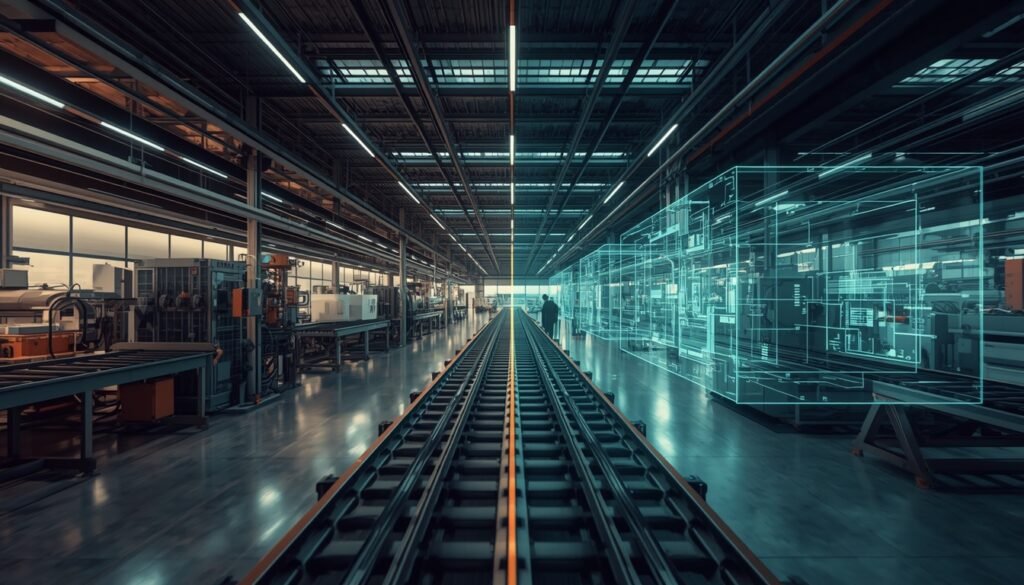
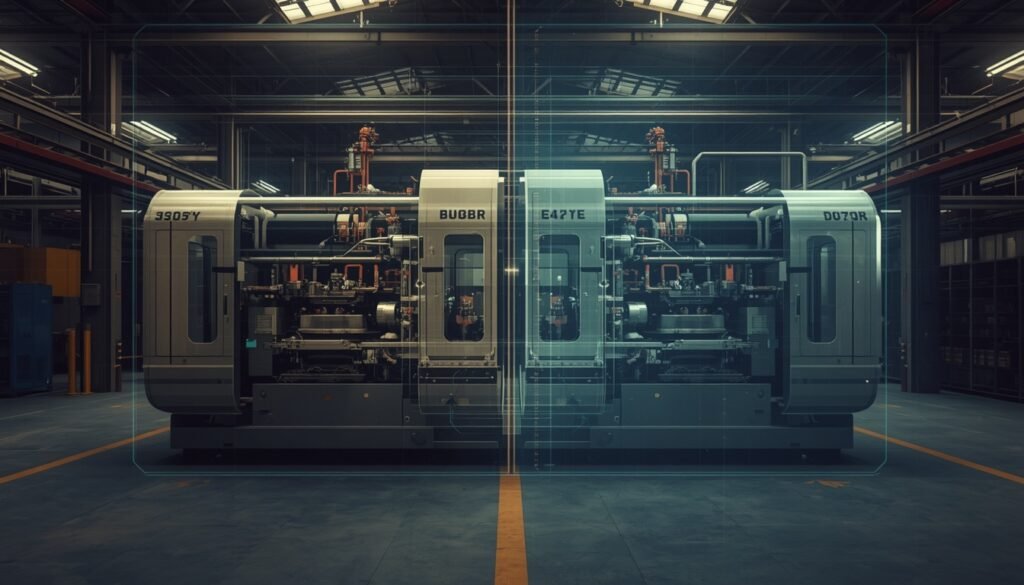
The technology is not simply a 3D model of a factory. A basic digital model can show how a facility looks, but a digital twin is more useful when it is connected to real-world data and represents how the physical system behaves.
Machine performance, production data, sensor information, maintenance records, inventory information and other operational inputs can feed the model.
This creates a connection, between the physical and digital environments.
For manufacturers the value of twins is therefore not just visualization. It is the ability to understand operations simulate changes identify problems and make more informed decisions.
As factories become increasingly connected through IoT, automation, cloud systems, AI and industrial analytics digital twins are becoming a part of the broader smart manufacturing environment.
What Are Digital Twins in Manufacturing?
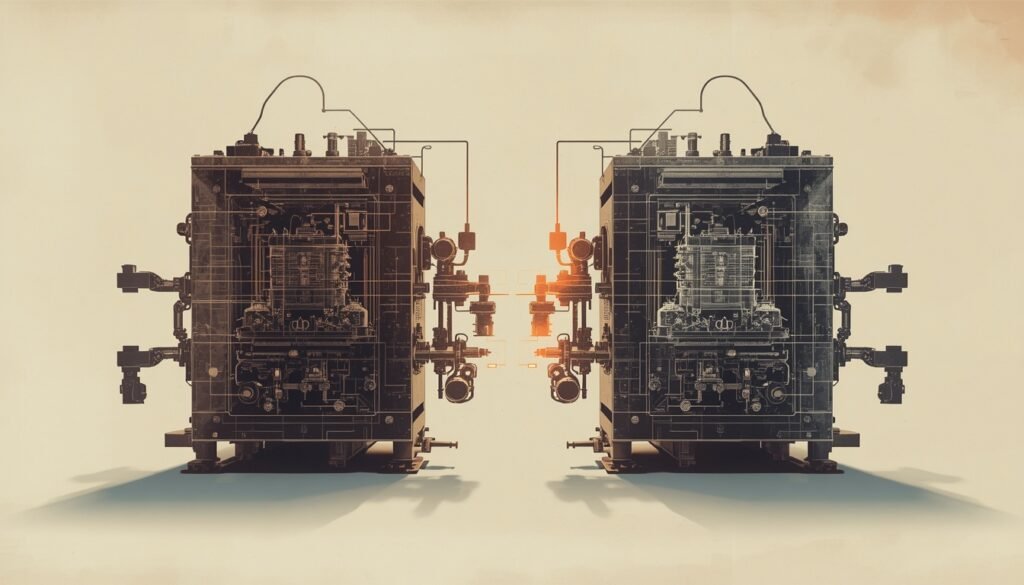
Digital twins in production are virtual representations of bodily production property, techniques, production traces, or complete centers.
A virtual dual can constitute some thing as small as a unmarried device or as large as a whole manufacturing unit.
The digital model may be related to actual-international operational statistics so that it reflects the situation and conduct of the bodily system.
For example, a digital twin of a production system could contain facts about:
- Machine operating status
- Temperature
- Vibration
- Production speed
- Energy consumption
- Maintenance history
- Production output
- Equipment downtime
A factory-level digital twin could go much further by representing production lines, warehouse operations, material flows, equipment, and production schedules.
Types of Manufacturing Digital Twins
| Digital Twin Type | What It Represents | Typical Use |
|---|---|---|
| Component twin | Individual component | Monitor component behavior |
| Machine twin | Manufacturing equipment | Performance and maintenance |
| Production-line twin | Connected machines | Process optimization |
| Factory twin | Entire facility | Layout and capacity planning |
| Supply chain twin | Supply network | Risk and logistics analysis |
The appropriate level depends on the manufacturer’s objectives.
How Does a Manufacturing Digital Twin Work?
A digital dual usually connects three important elements: the bodily asset, the facts layer, and the digital model.
The physical factory generates information thru sensors, machines, PLCs, ERP systems, MES systems, protection systems, and different technology.
That data can then be transferred into the digital environment.
The virtual model uses the information to represent current operating conditions and support analysis or simulation.
The process can be viewed as:
Physical Factory → Data Collection → Digital Model → Analysis & Simulation → Better Decision
The link does not need to be real-time for all situations. Some digital twins run all the time while others get updated now and then based on what they’re used for.
The main thing is that the digital version gives information about the real system.
Why Digital Twins Matter for Modern Manufacturing
Manufacturing environments are becoming more complex.
Companies are producing more product variations, operating interconnected equipment, managing tighter delivery requirements, and dealing with changing demand.
This creates a greater need to understand how factory decisions will affect the wider operation. Digital twins can help manufacturers move from “What happened?” toward “What could happen?”
Traditional manufacturing data usually looks at results.
For example a screen might show that a machine had eight hours of stopping month.
A digital twin can do more by letting teams see what might happen if the machine is swapped out used in a way moved to another spot or kept in better shape at a different time.
This ability to predict and test makes digital twins very useful, for making choices.
1. Digital Twins Improve Factory Layout Planning
Factory layout has an impact on efficiency.
The placement of machines, storage areas, production stations, workers and material routes can affect travel time, congestion, safety and production flow.
Changing a layout can cost a lot of money.
Digital Twins let manufacturers model layout changes before they move real equipment. For example a manufacturer could simulate what happens if a machine is moved closer, to a material storage area.
The virtual model can help evaluate if the change cuts down material movement or causes congestion in spots.
Factory Layout Decisions Supported by Digital Twins
| Decision | What Can Be Evaluated |
|---|---|
| Machine placement | Material and workflow impact |
| Warehouse location | Travel distance |
| Production-line arrangement | Process flow |
| Storage placement | Material accessibility |
| Worker movement | Travel and congestion |
| New equipment installation | Space and capacity |
This reduces the need to rely entirely on trial and error.
2. Digital Twins Help Optimize Production Processes
Production processes often contain multiple interconnected stages.
A delay at one stage can create a queue at another. Digital twins can simulate these relationships.
Manufacturers can use virtual models to examine cycle times, machine utilization, material movement, and production sequences.
If a particular workstation consistently creates a bottleneck, the digital twin can be used to test different solutions.
For example, the manufacturer could simulate adding another machine, changing the sequence of production, reducing setup time, or reallocating work.
This allows teams to compare possible outcomes before implementing physical changes.
3. Digital Twins Support Predictive Maintenance
Digital twins can also support predictive maintenance in manufacturing.
When a digital twin is connected to machine sensors and maintenance data, it can provide a virtual representation of equipment condition.
The system can compare current operating behavior with expected performance.
If machine vibration, temperature, energy consumption, or other indicators begin to change, the digital model can help identify potential equipment issues.
This creates a connection between equipment monitoring and maintenance planning.
Instead of simply receiving a machine alert, maintenance teams can use the digital environment to understand the potential impact of different maintenance decisions.
4. Digital Twins Help Reduce Machine Downtime
Unexpected downtime can affect the entire production process.
Digital twins can help manufacturers understand how equipment failure or planned maintenance could affect production.
For example, a manufacturer could simulate taking a critical machine offline.
The model could help evaluate:
- Which production orders would be affected
- Whether another machine can handle the workload
- How long production delays could last
- Whether production schedules need adjustment
- Whether additional capacity is required
This makes maintenance planning more connected to production planning.
Digital Twin Impact on Maintenance
| Maintenance Activity | Digital Twin Contribution |
|---|---|
| Equipment monitoring | Represents equipment condition |
| Failure analysis | Helps identify potential scenarios |
| Maintenance scheduling | Tests timing options |
| Spare parts planning | Supports equipment planning |
| Repair planning | Simulates potential impact |
| Asset replacement | Evaluates alternatives |
5. Digital Twins Improve Production Planning
Production planning requires manufacturers to balance demand, capacity, materials, machines, labor, and delivery requirements.
A digital twin can provide a virtual environment for testing production schedules.
For example, if a manufacturer receives a large new order, planners can simulate how the order would affect current production.
They can evaluate whether existing gadget has sufficient capacity or whether manufacturing desires to be rescheduled.
This can be specially precious for complicated production environments wherein one alternate can affect multiple production ranges.
6. Digital Twins Help Manufacturers Identify Bottlenecks
Bottlenecks limit the overall flow of production.
Sometimes bottlenecks are easy to identify. Other times, they are caused by interactions between different processes. Digital twins can help manufacturers visualize and simulate these interactions.
For example, a production line may have sufficient machine capacity but still experience delays because materials are not reaching the workstation quickly enough.
A digital twin can model the relationship between machine capacity and material movement.
This can help manufacturers identify the actual cause rather than addressing only the visible symptom.
Digital Twins Support Capacity Planning
Manufacturers often need to determine whether existing factories can handle future demand.
Expanding physical capacity can require significant investment.
Before purchasing new equipment or constructing additional facilities, manufacturers can use a digital twin to evaluate current capacity. The model can simulate higher production volumes and identify where capacity constraints may occur.
Capacity Planning With Digital Twins
| Planning Question | Digital Twin Use |
|---|---|
| Can current equipment handle demand? | Simulate higher workloads |
| Where is capacity limited? | Identify bottlenecks |
| Is new equipment required? | Test capacity scenarios |
| What happens after expansion? | Model future production |
| Which line should be expanded? | Compare alternatives |
This can support more informed capital investment decisions.
8. Digital Twins Improve Energy Management
Energy consumption is a concern for manufacturers.
Factories use amounts of electricity and other resources across machines, HVAC systems, compressors, lighting and production processes.
Digital twins can incorporate energy consumption data. Help manufacturers understand how operational changes may affect energy use.
For example manufacturers can simulate production schedules or machine operating conditions to identify opportunities for reducing energy consumption.
This can connect efficiency with sustainability objectives
9. Digital Twins Support Quality Improvement
Quality problems can create scrap, rework, production delays, and customer issues.
Digital twins can help manufacturers analyze relationships between production conditions and quality outcomes.
A model can incorporate machine settings, process parameters, production speeds, temperatures, material information, and historical quality results.
Manufacturers can then explore how changes in process conditions might influence quality.
This does not replace physical quality testing.
Instead, it provides an additional analytical layer that can help teams investigate potential causes and evaluate possible improvements.
10. Digital Twins Improve New Product Introduction
Introducing a product into an existing factory can be complicated.
New products may require materials, machine settings, production sequences, tooling or quality processes.
A digital twin can help manufacturers evaluate the production requirements before making physical changes.
Teams can simulate production flows identify bottlenecks estimate capacity requirements and assess material movement.
This can reduce the risk associated with product introduction.
Digital Twin Applications Across Manufacturing
| Manufacturing Stage | Digital Twin Application |
|---|---|
| Product design | Evaluate manufacturability |
| Production planning | Test schedules |
| Factory design | Optimize layout |
| Production | Improve process flow |
| Maintenance | Simulate equipment conditions |
| Quality | Analyze process relationships |
| Expansion | Evaluate capacity |
| Energy management | Test efficiency scenarios |
The Role of IoT in Manufacturing Digital Twins
The Internet of Things is one of the technologies that makes digital twins more powerful.
IoT sensors provide information about physical equipment and processes.
Without operational data, a digital twin may remain primarily a static model.
With connected data, the model can become dynamic.
Sensors can provide information about machine temperature, vibration, pressure, speed, energy consumption, and other operating conditions.
This information can help the virtual model reflect what is happening in the physical factory.
The Role of AI in Digital Twins
Artificial intelligence can add another layer of intelligence to digital twins.
AI can analyze operational data, identify patterns, detect anomalies, and support predictions.
For example, a digital twin combined with AI could analyze machine behavior and identify conditions associated with potential failures.
AI can also help evaluate large numbers of possible scenarios.
This is particularly useful when manufacturers need to compare multiple production schedules or operational configurations.
However, AI predictions are only as reliable as the data and models supporting them.
Digital Twins and Smart Manufacturing
Digital twins are becoming an important component of smart manufacturing because they connect physical operations with digital intelligence.
A connected factory can generate large volumes of data.
IoT collects information. Cloud and edge platforms process it. AI and analytics interpret it. Digital twins can use that information to represent and simulate the physical operation.
Together, these technologies create a more connected manufacturing environment.
Smart Manufacturing Technology Stack
| Technology | Role |
|---|---|
| IoT | Collects equipment data |
| Edge computing | Processes data near machines |
| Cloud | Stores and connects information |
| AI | Identifies patterns and predictions |
| Analytics | Provides operational insights |
| Digital twin | Models and simulates operations |
The technologies become more valuable when they work together rather than as isolated systems.
Challenges of Implementing Digital Twins
Despite their potential, digital twins can be complex to implement.
One challenge is data integration.
Manufacturers may have information distributed across ERP, MES, maintenance, quality, inventory, and machine-control systems.
Connecting these systems can require significant planning.
Another challenge is model accuracy.
A digital twin needs to represent important aspects of the physical system accurately enough to provide useful insights.
Cybersecurity is also important because digital twins may connect to operational technology and enterprise systems.
Common Digital Twin Challenges
| Challenge | Potential Issue |
|---|---|
| Data integration | Disconnected information |
| Model complexity | High implementation effort |
| Data quality | Inaccurate insights |
| Legacy equipment | Limited connectivity |
| Cybersecurity | Increased digital exposure |
| Skills | Lack of specialized expertise |
| Cost | Significant initial investment |
Manufacturers should therefore start with a clearly defined business problem rather than building a digital twin simply because the technology is available.
How Manufacturers Can Start With Digital Twins
A practical starting point is to select a specific asset or process.
For example, a manufacturer could create a digital twin for a critical production line.
The company can then identify the data required, connect relevant systems, establish the model, and define measurable objectives.
Once the model demonstrates value, it can be expanded.
Digital Twin Implementation Roadmap
| Step | Action |
|---|---|
| 1 | Select a high-value use case |
| 2 | Identify required data |
| 3 | Connect relevant systems |
| 4 | Build the virtual model |
| 5 | Validate the model |
| 6 | Test operational scenarios |
| 7 | Measure business impact |
| 8 | Expand to other processes |
This approach can help manufacturers manage implementation complexity.
How to Measure Digital Twin Success
A digital twin should deliver measurable business value.
Manufacturers can track improvements in areas such as downtime, production throughput, cycle time, energy consumption, maintenance costs, quality, and planning accuracy.
For example, if a digital twin is being used to optimize factory layout, the manufacturer may measure material travel distance before and after the change.
If the digital twin is being used for maintenance planning, downtime and maintenance costs may be more relevant.
Digital Twin KPIs
| KPI | What It Measures |
|---|---|
| Downtime | Equipment availability |
| Throughput | Production output |
| Cycle time | Process efficiency |
| Energy consumption | Resource efficiency |
| Scrap rate | Quality performance |
| Maintenance cost | Asset management |
| Material movement | Logistics efficiency |
The right metrics should be connected directly to the business problem the digital twin is designed to solve.
The Future of Digital Twins in Manufacturing
The future of digital twins in manufacturing will increasingly involve AI, real-time IoT data, advanced simulation, robotics, edge computing, and increasingly sophisticated factory models.
Digital twins may move beyond individual machines and production lines toward connected representations of entire manufacturing ecosystems.
A factory digital twin could incorporate production, inventory, logistics, maintenance, quality, energy, and workforce information.
This would allow manufacturers to evaluate decisions from multiple perspectives.
For example, a proposed production schedule could be analyzed not only for output but also for energy consumption, machine availability, material movement, and delivery performance.
AI could also make digital twins more autonomous by continuously identifying opportunities for optimization and recommending changes.
However, the goal should not be to create the most complicated digital model possible.
The goal should be to create a digital representation that helps people make better decisions.
Conclusion
Digital twins in manufacturing are changing how factories analyze operations and make important decisions.
By creating virtual representations of machines, production lines, facilities, and processes, manufacturers can evaluate potential changes before implementing them physically.
Digital twins can support factory layout planning, production scheduling, predictive maintenance, capacity planning, bottleneck identification, quality improvement, energy management, and new product introduction.
Their value increases when they are connected to technologies such as IoT, AI, cloud platforms, industrial analytics, and manufacturing execution systems.
At the same time, implementing a digital twin requires careful attention to data quality, integration, cybersecurity, model accuracy, cost, and employee skills.
Manufacturers do not need to create a digital twin of an entire factory immediately. Starting with a critical machine, production line, or specific operational problem can provide a more practical path.
As factories become more connected and data-driven, digital twins will become increasingly useful for answering an important manufacturing question:
What will happen if we change something?
Instead of discovering the answer after making an expensive physical change, manufacturers can increasingly test, analyze, and compare scenarios in a virtual environment first.
That ability can make factory decision-making more informed, less risky, and more responsive to changing production requirements.
Frequently Asked Questions
1. What are digital twins in manufacturing?
Digital twins in manufacturing are virtual representations of physical machines, production lines, processes, or entire factories. They can be connected to real operational data to monitor, analyze, and simulate manufacturing activities.
2. How do digital twins improve manufacturing decisions?
Digital twins allow manufacturers to test potential changes virtually before implementing them physically. They can help evaluate production schedules, factory layouts, equipment changes, maintenance plans, capacity requirements, and other operational scenarios.
3. What technologies are used with digital twins?
Digital twins commonly work with IoT sensors, industrial data platforms, cloud computing, edge computing, AI, machine learning, analytics, simulation software, ERP systems, and manufacturing execution systems.
4. How do digital twins help reduce machine downtime?
A digital twin can use machine data to represent equipment condition and identify abnormal operating patterns. It can also help maintenance teams simulate different maintenance scenarios and understand how equipment downtime could affect production.
5. Can digital twins improve production planning?
Yes. Manufacturers can use digital twins to simulate production schedules, evaluate machine capacity, identify bottlenecks, and understand how changes in demand or equipment availability could affect production.
6. What is the difference between a digital model and a digital twin?
A digital model is generally a virtual representation of a physical object or system. A digital twin goes further by maintaining a connection with the physical system through operational data and can be used for monitoring, analysis, and simulation.
7. How do IoT sensors support digital twins?
IoT sensors collect information from physical machines and processes. This data can be used to update the digital twin and provide a more accurate representation of real-world operating conditions.

Jimmy Simmons
Jimmy Simmons contributes insights and analysis across banking, financial services, fintech, markets and emerging technology.