Smart Manufacturing Trends: How Connected Factories Are Reshaping Production
Manufacturing is shifting through a major shift. Factories that once trusted remoted machines, manual monitoring, paper-based procedures, and periodic manufacturing reports are more and more turning into connected environments where machines, employees, software, sensors, and manufacturing structures constantly alternate facts. This transformation is at the heart of the latest smart manufacturing trends, as manufacturers look for better ways to improve productivity, reduce downtime, respond to changing demand, control costs, and maintain consistent product quality. A modern smart factory is no longer simply a facility with automated machines. Manufacturers want to work make fewer mistakes react faster when demand changes keep costs low and always make high-quality products.
The rise of connected factories is closely associated with Industry 4.0, Industrial Internet of Things (IIoT), industrial automation, cloud computing, edge computing, advanced analytics, digital twins, robotics, and artificial intelligence. NIST’s 2026 roadmap for AI and device mastering in smart manufacturing highlights commercial data analytics, advanced sensing, self sufficient systems, digital twins, robotics, deliver chain optimization, and sustainable manufacturing some of the essential regions shaping the subsequent stage of smart manufacturing. At the identical time, the World Economic Forum describes business operations as transferring from traditional automation in the direction of intelligent, connected, and an increasing number of self sufficient systems.
This shift matters because manufacturers are no just trying to make more stuff. They need to make it faster without losing quality. They must handle supply chains. They have to meet customer needs use waste and energy and keep their systems safe and secure. Because of this smart manufacturing technology is no longer an experiment for big companies. It has become part of long-term strategy for businesses. It’s now a tool, for staying competitive.
What Is Smart Manufacturing?
Smart manufacturing is an approach to production that connects machines, equipment, people, software, sensors, and operational systems so manufacturers can collect and use information more effectively. Instead of treating each system or manufacturing method as an remoted unit, clever production creates a more related environment wherein facts can pass between production gadget, manufacturing execution structures, organisation systems, first-class processes, maintenance operations, and supply chain features.
A traditional factory may collect machine information at specific intervals and rely heavily on operators or managers to interpret that information. A smart factory, by contrast, can continuously collect operational data and make it available to the people and systems that need it. This creates the foundation for real-time monitoring, predictive maintenance, automated quality control, production optimization, and faster decision-making.
The National Institute of Standards and Technology or NIST defines manufacturing as a cyber-physical system. This means it mixes technology, sensors, computer controls and production software to boost efficiency. It also makes real-time analysis across all parts of the manufacturing process
Smart Manufacturing vs. Traditional Manufacturing
| Area | Traditional Manufacturing | Smart Manufacturing |
|---|---|---|
| Machine monitoring | Periodic or manual | Continuous and connected |
| Production data | Often siloed | Shared across systems |
| Maintenance | Reactive or scheduled | Predictive and condition-based |
| Quality control | Manual and sampling-based | Automated and data-driven |
| Decision-making | Historical reports | Real-time operational insights |
| Production planning | Relatively fixed | More dynamic and adaptive |
| Connectivity | Limited | Machines, systems and people connected |
| Optimization | Process-specific | Cross-functional and data-driven |
The objective isn’t to take away humans from manufacturing. Instead, connected production offers employees better statistics and tools as a way to discover issues earlier, make greater correct choices, and cognizance on activities wherein human judgment is most treasured.
Why Connected Factories Are Becoming More Important
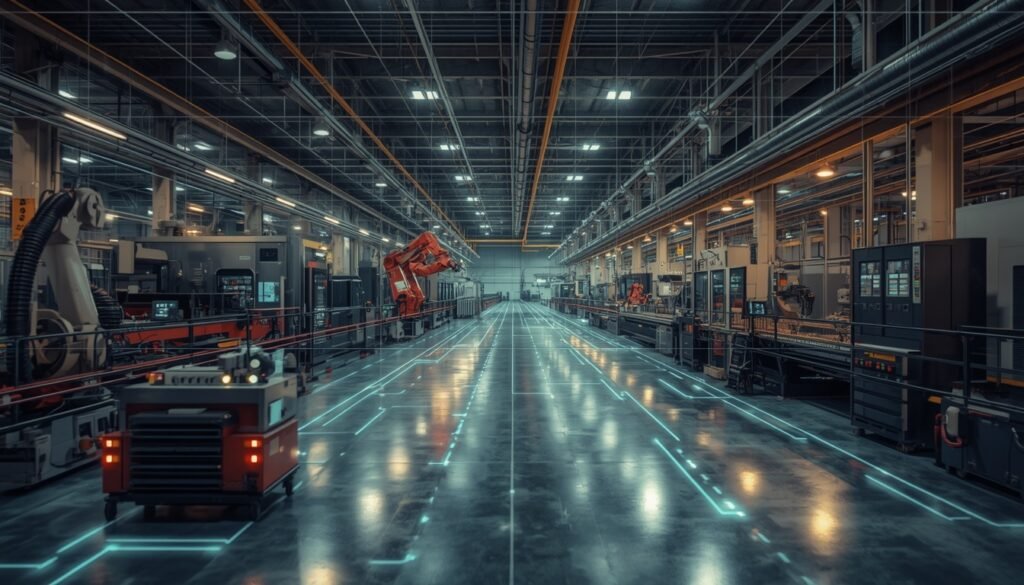
The shift toward factories is driven by many changes that are happening together. Manufacturers face demand, tighter delivery expectations, higher operating costs, disruptions in supply chains challenges with the workforce and growing pressure to boost sustainability.
At the same time, the cost and accessibility of digital technologies have improved. Sensors can capture machine conditions, industrial networks can move data between systems, cloud platforms can support centralized analytics, and edge computing can process information closer to the equipment generating it.
The result is a manufacturing environment where information can become an operational asset.
Deloitte’s 2026 manufacturing outlook reports continued investment in smart manufacturing, with automation hardware, sensors, data analytics, and cloud computing among the foundational technologies manufacturers are prioritizing.
Key Smart Manufacturing Trends Reshaping Modern Factories
1. Industrial IoT Is Connecting Machines Across the Factory
One of the most essential smart production tendencies is the increasing use of Industrial Internet of Things era. Industrial IoT connects machines, sensors, equipment, and manufacturing property in order to gather and trade operational statistics.
Sensors can monitor temperature, vibration, pressure, energy consumption, machine speed, production cycles, and other conditions. That information can then be used to understand how equipment is performing and where operational problems may be developing.
The value of IIoT is not simply the amount of data collected. The real value comes from converting machine data into operational information. Manufacturers can use equipment to monitor production performance identify abnormal conditions support maintenance teams and improve process visibility.
NIST research describes IIoT as a key enabler of ubiquitous connectivity in smart manufacturing, particularly when combined with AI and other advanced technologies.
2. AI Is Moving From Experimentation Toward Manufacturing Operations
Artificial intelligence is becoming another major component of smart factory technology. Manufacturers are using AI and machine learning to analyze large volumes of production data and identify patterns that may be difficult to detect through traditional analysis.
AI can support quality inspection, production forecasting, machine monitoring, process optimization, scheduling, demand planning, and anomaly detection.
The more connected a manufacturing environment becomes, the more operational data becomes available for advanced analytics. This creates an important relationship between Industrial IoT and AI in manufacturing. Sensors generate data, connected systems organize it, and AI can help interpret it.
However, a success AI implementation depends on dependable facts and sturdy integration. NIST’s today’s smart manufacturing roadmap in particular identifies commercial massive statistics, heterogeneous sensing and manipulate systems, truthful AI, digital twins, robotics, and deliver chain optimization as essential regions for future improvement.
3. Digital Twins Are Creating Virtual Views of Production
Digital twins are becoming an increasing number of critical in connected production because they offer a digital illustration of a physical asset, process, or manufacturing environment.
A digital twin can combine operational information with models and simulations to help manufacturers understand how equipment or processes behave. Instead of waiting for a physical problem to occur, manufacturers can use digital representations to evaluate possible changes, identify performance issues, and support production decisions.
For example, a manufacturer could use a digital twin to evaluate how changing production parameters might affect output before making the change on the physical production line.
NIST’s 2026 digital twin workshops identified opportunities in design, production, and lifecycle management even as also highlighting interoperability, cybersecurity, validation, and workforce readiness as important demanding situations.
4. Predictive Maintenance Is Becoming More Data-Driven
Unexpected system failure can create pricey production delays. This is why predictive maintenance continues to be an critical a part of smart manufacturing.
Traditional maintenance approaches often depend on fixed schedules or waiting until a machine fails. Predictive maintenance uses equipment data to identify signs of potential problems before they result in major downtime.
Connected sensors can constantly monitor gadget conditions, whilst analytics can become aware of uncommon styles. Maintenance groups can then look at the system before a small problem becomes a major production failure.
This approach can improve device availability, reduce useless preservation, and assist manufacturers make higher use of renovation resources.
Smart Technologies and Their Manufacturing Applications
| Smart Technology | Manufacturing Application | Potential Business Benefit |
|---|---|---|
| Industrial IoT | Machine monitoring | Greater operational visibility |
| AI and ML | Quality and process analytics | Faster decision-making |
| Digital twins | Process simulation | Better production planning |
| Edge computing | Real-time machine analytics | Faster response |
| Robotics | Automated production | Higher consistency |
| Cloud platforms | Centralized data management | Scalable analytics |
| Advanced sensors | Equipment monitoring | Earlier problem detection |
5. Edge Computing Is Bringing Intelligence Closer to Machines
Cloud computing remains important for manufacturing data management. Not every decision needs to travel to a remote data center.
This is where industrial edge computing becomes valuable. Edge computing allows data to be processed closer to the machines, sensors, or equipment generating it. This can reduce latency and support applications that require rapid responses.
For example, a manufacturing system may need to detect an abnormal machine condition and respond almost immediately. Processing that records closer to the manufacturing environment can help lessen delays.
NIST has highlighted intelligent edge systems as an important development for connected manufacturing because computing, analytics, connectivity, and advanced sensing can work closer to where data is generated.
6. Smart Robotics Are Becoming More Flexible
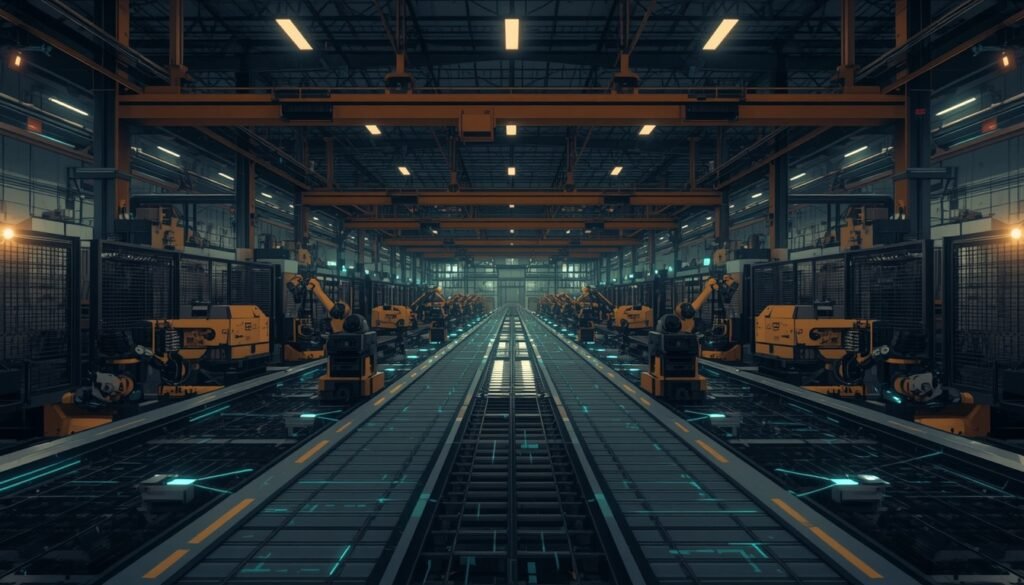
Robotics has been part of manufacturing for decades, but modern industrial robots are becoming more connected, data-aware, and adaptable.
Instead of performing only repetitive movements within isolated production cells, connected robots can increasingly interact with sensors, production software, vision systems, and other equipment.
This supports applications such as assembly, material handling, welding, inspection, packaging, and machine tending.
The rising concept of physical AI additionally points closer to a future in which wise structures can interact greater efficiently with physical environments. The World Economic Forum’s 2026 business operations outlook identifies bodily AI and intelligent systems as a part of the shift closer to extra adaptive and self sufficient industrial operations.
7. Real-Time Production Visibility Is Becoming a Competitive Advantage
Manufacturers cannot improve what they cannot see.
Connected manufacturing systems provide greater visibility into production performance by bringing information from machines, operators, quality systems, maintenance activities, and other processes into a more accessible environment.
Instead of discovering production problems after a shift has ended, managers can potentially identify issues while production is still underway.
Real-time dashboards can provide information, about machine utilization, production output, downtime, quality performance, energy consumption and other operational indicators.
This visibility allows manufacturing teams to move from reviewing historical performance toward actively managing current production conditions.
How Smart Factories Improve Manufacturing Performance
The best reason to adopt manufacturing is not just the technology. It’s what that technology allows manufacturers to do.
Connected factories give companies a view of operations help spot where production slows down cut down on unplanned stoppages boost product quality and react faster to shifts in customer demand.
Major Benefits of Connected Manufacturing
| Benefit | How Connected Manufacturing Helps |
|---|---|
| Higher productivity | Identifies bottlenecks and inefficient processes |
| Lower downtime | Enables predictive and condition-based maintenance |
| Better quality | Supports automated inspection and anomaly detection |
| Faster decisions | Provides real-time production information |
| Lower waste | Identifies inefficient resource and material usage |
| Greater flexibility | Helps production respond to changing requirements |
| Better planning | Connects production data with planning systems |
| Improved resilience | Provides greater visibility across operations |
The benefits also extend beyond individual machines. A connected factory can join a digital manufacturing network. In this system production, logistics, inventory, suppliers, maintenance and business systems share information seamlessly.
NIST’s focus on the digital thread highlights how important it is to connect data across design, manufacturing and product support. This helps reduce gaps, between stages and makes integration smoother.
The Role of Data in Smart Manufacturing
Data is the foundation of a factory.. Just collecting more data does not make a factory smarter.
Manufacturers need data. They also need standards. Connectivity must be appropriate. Infrastructure must be secure. Systems must be able to turn information into real decisions.
A factory can have thousands of sensors.. If those systems cannot talk to each other the factory will still struggle to get meaningful results
This makes manufacturing data integration an important part of smart manufacturing strategy.
From Machine Data to Business Decisions
| Stage | What Happens |
|---|---|
| Data generation | Sensors and machines produce operational data |
| Data collection | Systems gather information from connected assets |
| Data integration | Information is combined across manufacturing systems |
| Data analysis | Analytics identify patterns and anomalies |
| Decision support | Teams receive actionable insights |
| Automation | Systems can trigger predefined responses |
| Continuous improvement | Results are measured and processes are refined |
This is why interoperability is so critical. Different machines, software systems, sensors, and operational systems want methods to exchange statistics successfully.
Smart Manufacturing Is Also Changing Workforce Requirements
Connected factories are not simply technology projects. They are workforce transformation projects.
As production systems become more digital, workers increasingly need a combination of manufacturing knowledge and digital skills. Operators may work with dashboards and connected equipment. Maintenance professionals may analyze sensor data. Engineers may work with digital twins and simulation tools. IT and OT teams may need to collaborate more closely.
The goal is not necessarily to replace experienced manufacturing workers. In cases smart manufacturing technologies can help experienced employees make better choices by giving them access, to information that was once hard to find.
This makes training, change management, and cross-functional collaboration essential parts of smart factory transformation.
Challenges Manufacturers Need to Address
Despite the benefits, implementing smart manufacturing is not always straightforward.
Many factories operate with legacy equipment that was not designed to communicate with modern digital platforms. Integrating old machines with new systems can require additional hardware, gateways, software, and engineering work.
Cybersecurity is another concern. Connected equipment creates more access points and expands the operational technology environment that manufacturers must protect.
Data quality can also become a problem. Inconsistent data formats, missing information, incompatible systems and isolated databases can lower the value of analytics.
Manufacturers must also think about investment costs, workforce readiness, interoperability, governance and scalability.
Common Smart Manufacturing Challenges
| Challenge | Why It Matters | Possible Approach |
|---|---|---|
| Legacy equipment | Older machines may lack connectivity | Use gateways and retrofit sensors |
| Data silos | Information remains isolated | Build integrated data architecture |
| Cybersecurity | Connected assets increase exposure | Strengthen OT security controls |
| Skills gap | New technology requires new capabilities | Invest in workforce training |
| High initial investment | Transformation can require significant capital | Start with measurable use cases |
| Interoperability | Systems may use different standards | Adopt open and compatible technologies |
Cybersecurity should be considered from the beginning rather than added after systems are connected. NIST notes that connected manufacturing environments create both opportunities and new cybersecurity considerations because sensitive information can move across networks of embedded and connected devices.
How Manufacturers Can Start a Smart Factory Transformation
Manufacturers do not need to transform an entire factory overnight.
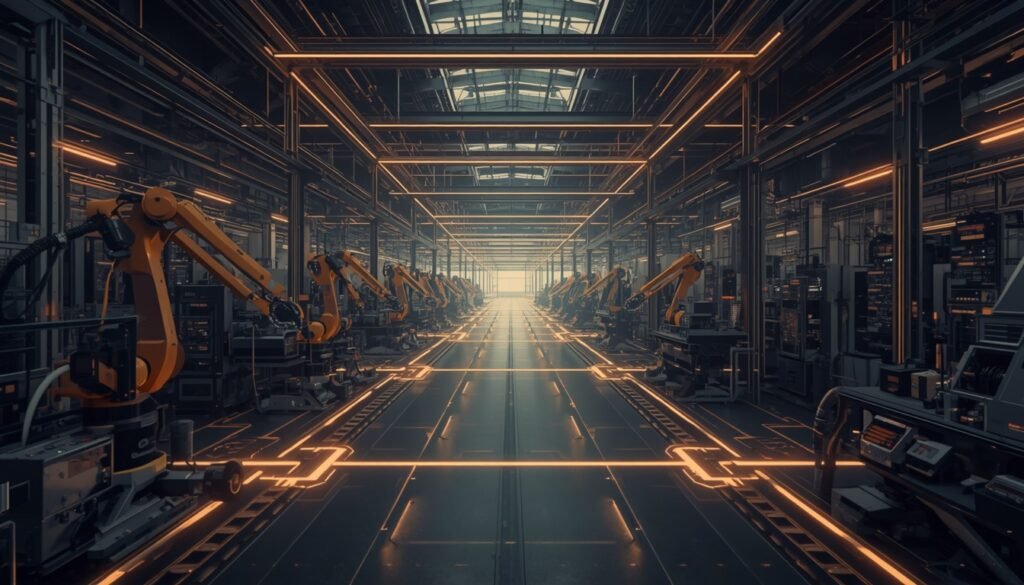
A practical way is to find a problem in operations that connected technology can solve and show real value. This could be machine stoppage, high energy use, quality that varies lack of clear production view or bad scheduling.
Once a use case is selected, manufacturers can connect the relevant equipment, collect reliable data, establish performance measurements, and evaluate the results.
The next step is to expand successful solutions to other machines, production lines, or facilities.
This method is getting more vital as manufacturers shift from single technology tests to digital operations. A recent World Economic Forum talk about expanding AI in factories says the value of a factory grows when good improvements can be copied across many sites.
Practical Smart Manufacturing Roadmap
| Phase | Primary Objective | Key Activities |
|---|---|---|
| 1. Assess | Identify opportunities | Review equipment, processes and data |
| 2. Prioritize | Select high-value use cases | Focus on downtime, quality or efficiency |
| 3. Connect | Establish data visibility | Add sensors and connectivity |
| 4. Analyze | Turn data into insights | Use analytics and monitoring |
| 5. Optimize | Improve operations | Adjust processes based on findings |
| 6. Scale | Expand successful solutions | Replicate across lines or facilities |
The most effective strategy is usually not to purchase every new technology available. Instead, manufacturers should build a connected technology foundation around measurable business problems.
What Is Next for Smart Manufacturing?
The next phase of smart manufacturing is likely to involve greater collaboration between connected machines, AI systems, robotics, digital twins, edge computing, and human workers.
Factories are moving toward systems that can do more than report what happened. They are increasingly being designed to identify what is happening, predict what could happen next, and in some situations recommend or initiate an appropriate response.
This is the broader movement from automation toward intelligent operations.
AI-powered structures should help optimize production schedules, digital twins should simulate procedure adjustments, connected sensors ought to pick out system abnormalities, and robotics should execute bodily tasks. Together, these competencies may want to create more adaptive production environments.
However, the future of smart manufacturing will not depend only on advanced algorithms. Reliable data, interoperability, cybersecurity, workforce capabilities, governance, and scalable infrastructure will remain essential.
Conclusion
The latest smart manufacturing trends show that the future of production is increasingly connected, data-driven, automated, and adaptive. Smart factories are bringing together Industrial IoT, sensors, robotics, AI, digital twins, edge computing, cloud platforms, and advanced analytics to create more visible and responsive manufacturing operations.
The biggest opportunity is not simply installing new technology. It is creating a manufacturing environment where information can move efficiently from machines and processes to the people and systems responsible for making decisions.
Connected factories can help manufacturers improve production visibility, reduce downtime, strengthen quality control, optimize resources, and respond more effectively to changing market conditions. At the same time, successful transformation requires manufacturers to address cybersecurity, legacy equipment, interoperability, workforce skills, and data quality.
As smart manufacturing continues to mature, the competitive advantage will increasingly belong to companies that can connect technology with practical operational outcomes. Manufacturers that build the right digital foundation today will be better positioned to adopt more advanced automation, AI, robotics, and intelligent systems as their operations evolve.
The smart factory is therefore not a single technology or one-time project. It is an ongoing transformation toward connected manufacturing, where data, machines, people, and intelligent systems work together to make production more efficient, flexible, resilient, and responsive.

Jimmy Simmons
Jimmy Simmons contributes insights and analysis across banking, financial services, fintech, markets and emerging technology.